
Best Proxies for Sneaker Bots: How to Avoid Cart Drops, Queue Bans, and IP Flags
Introduction
If your sneaker bot performs perfectly in testing but fails during a real drop, the issue is rarely the bot.
It is almost always the proxies.
Modern sneaker platforms like Shopify stores, Footsites, and Nike SNKRS no longer rely on simple IP blocking. They evaluate subnet reputation, session stability, request velocity, and long-term behavioral patterns.
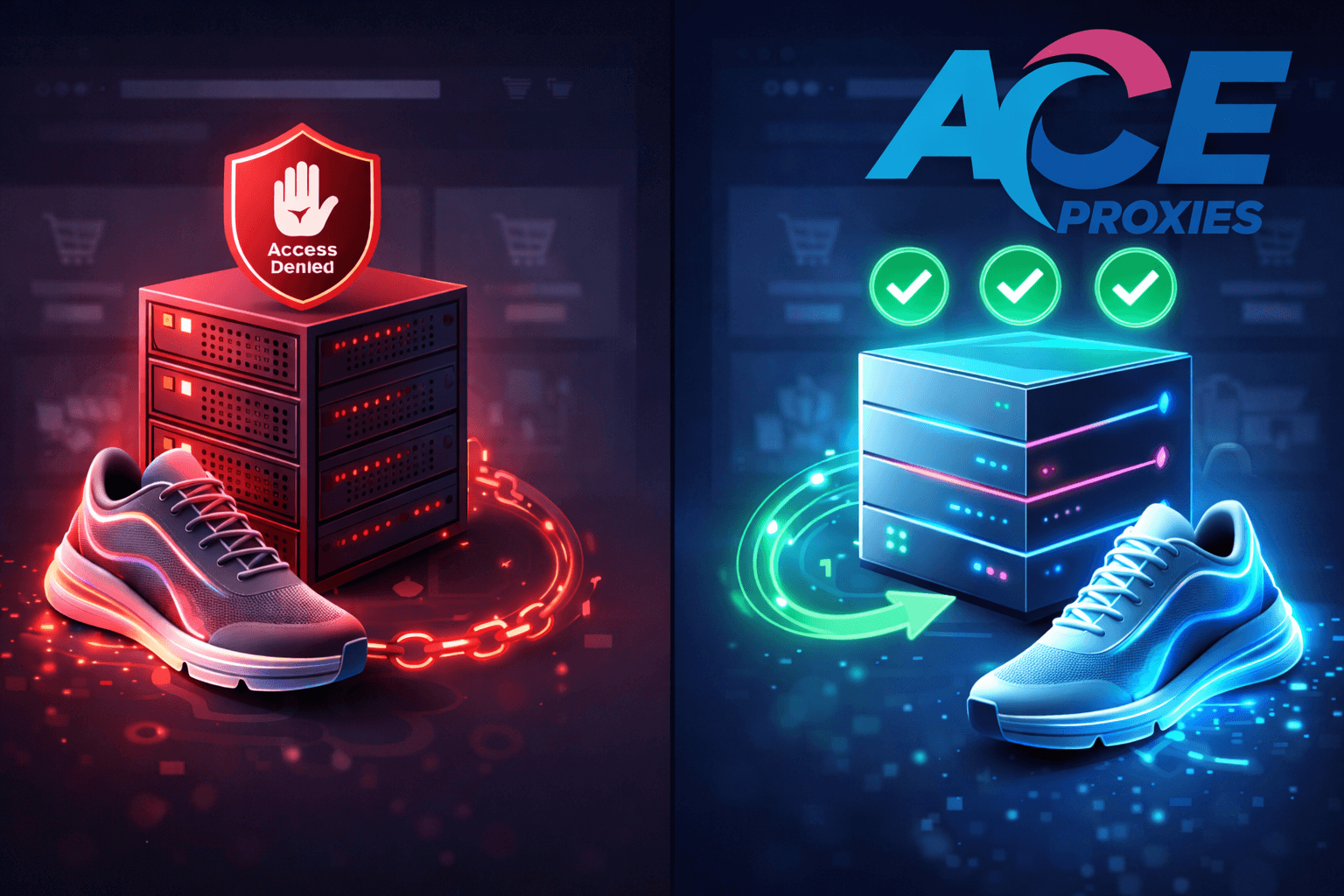
Using the wrong proxy type can mean endless queue loops, cart drops at checkout, or instant access denied pages.
This guide explains which proxy types actually work for sneaker bots today, why most setups fail, and how to configure your infrastructure properly.
Why Sneaker Sites Are Harder Than Ever to Bot
Sneaker platforms now combine multiple detection systems:
- IP reputation scoring
- Subnet clustering analysis
- Rate limiting and velocity tracking
- Cookie and session validation
- TLS fingerprint inspection
- Queue behavior monitoring
For example:
Shopify aggressively monitors checkout session integrity. If your IP rotates mid-session, you risk losing your cart.
Footsites detect subnet saturation. If too many tasks hit from the same /24 block, bans cascade quickly.
Nike SNKRS scores IPs over time. A burned subnet can remain flagged for weeks.
This means proxy selection is no longer optional optimization. It is core infrastructure.
The Wrong Way vs The Right Way
The Wrong Way: Cheap Bulk Datacenter Lists
Datacenter proxies are fast and inexpensive. Many beginners buy large batches hoping volume alone will solve the problem.
Common issues:
- Shared subnets burn quickly
- Easy detection patterns
- High failure rates during major drops
- Increased queue resets
Datacenter proxies still have valid use cases, but they should not be your primary checkout solution.
The Wrong Way: Over-Rotating Residential Proxies
Some users switch to rotating residential proxies and enable rotation on every request.
This breaks:
- Session cookies
- Queue tokens
- Cart validation flows
Result: stuck in queue or repeated cart drops.
Rotation is powerful, but only when configured properly.
The Right Way: Match Proxy Type to Task
Sneaker botting works best when each stage uses the correct proxy architecture.
Account generation → Rotating Residential Proxies
Product scraping → Rotating Residential Proxies
Queue entry → Static Residential (ISP) Proxies
Checkout → Static Residential (ISP) Proxies
High-speed restock checks → Select Datacenter Proxies
The goal is balance: diversity for scraping, stability for checkout, speed for monitoring.
Step-by-Step Sneaker Proxy Strategy
Step 1: Use Rotating Residential Proxies for Scraping and Preparation
Before drop time, you need IP diversity.
Tasks include:
- Monitoring product pages
- Generating accounts
- Testing endpoints
- Watching early stock signals
Rotating residential proxies work well because they provide:
- Large IP diversity across countries
- Organic ISP routing
- Lower mass detection risk
Recommended rotation settings: 1 to 10 minutes. Avoid per-request rotation for anything session-based.
Step 2: Switch to Static Residential (ISP) for Checkout
Checkout requires stability.
Static Residential proxies, often called ISP proxies, combine:
- Real ISP-assigned IP addresses
- Long session persistence
- High trust scores
- Low latency performance
Unlike rotating pools, ISP proxies maintain the same IP during checkout. This dramatically reduces cart drops and session invalidation.
For Shopify and Footsites, sticky sessions are critical.
This is where most serious sneaker operators gain their edge.
Step 3: Use Datacenter Proxies Strategically
Datacenter proxies still have value for:
- High-speed monitoring
- Restock detection
- Low-risk endpoint polling
- Load testing
They offer excellent speed, but should supplement residential and ISP infrastructure, not replace it.
Pro Tip
If multiple proxies share the same /24 subnet, platforms can cluster-ban them.
Always evaluate:
- Subnet diversity
- Concurrent active IPs
- Burn history
- Overuse signals
A large advertised IP pool means little if the active subnet distribution is poor.
Technical Benchmarks to Evaluate Sneaker Proxies
1. Concurrent Online IPs
A provider may claim tens of millions of IPs. What matters is how many are online at the same time.
Look for strong concurrency levels and real-time availability, not just total pool size.
2. Subnet Cleanliness
Clean subnets are critical.
Avoid:
- Heavily recycled ranges
- Overused sneaker subnets
- Oversold IP blocks
Subnet reputation directly affects queue survival.
3. Session Persistence
For checkout flows:
- Sticky sessions should last 10 to 30 minutes
- IP should not rotate mid-cart
- Cookie continuity must be preserved
Static Residential proxies are ideal here.
4. Latency and Stability
During drops, milliseconds matter.
Benchmarks to look for:
- Under 200ms latency
- Low jitter
- Consistent throughput
ISP proxies often deliver the best balance between speed and trust.
5. Predictable Pricing at Scale
Rotating residential proxies are typically sold per GB. High-volume users benefit from predictable bulk pricing tiers.
At scale, cost per successful checkout matters more than cost per request.
Final Verdict
If you are stuck in queue loops, experiencing cart drops, or seeing repeated access denied errors, your proxy architecture likely needs adjustment.
The most effective sneaker bot setup today combines:
- Rotating Residential Proxies for scraping and preparation
- Static Residential (ISP) Proxies for checkout stability
- Selective Datacenter Proxies for high-speed monitoring
Sneaker platforms analyze behavior consistency and subnet quality, not just IP count. Choosing the right proxy for the right task significantly improves checkout success rates.
If you are optimizing for serious sneaker automation, review proxy plans that emphasize clean subnets, high concurrency, and stable ISP routing rather than just headline IP pool size.
Stop letting a bad proxy setup cost you checkouts. Equip your bots with the blazing-fast speeds and pristine subnets you need to dominate drop day.
Upgrade your sneaker setup at Ace Proxies today
FAQ
What are the best proxies for sneaker bots?
Static Residential (ISP) proxies are best for checkout. Rotating residential proxies work well for scraping and account creation.
Are datacenter proxies useless for sneaker bots?
No. They are effective for monitoring and restock detection but often struggle during high-profile checkout phases.
How many proxies do I need for a drop?
Many operators use one proxy per task to prevent cross-session contamination. The exact number depends on task volume and target platform.
Why do I get stuck in the queue repeatedly?
Queue loops often happen when IPs rotate mid-session or when subnets are flagged. Stable sticky ISP proxies help reduce this issue.